Winner of the Inaugural Aurelia Prize in Design for Space Urbanism
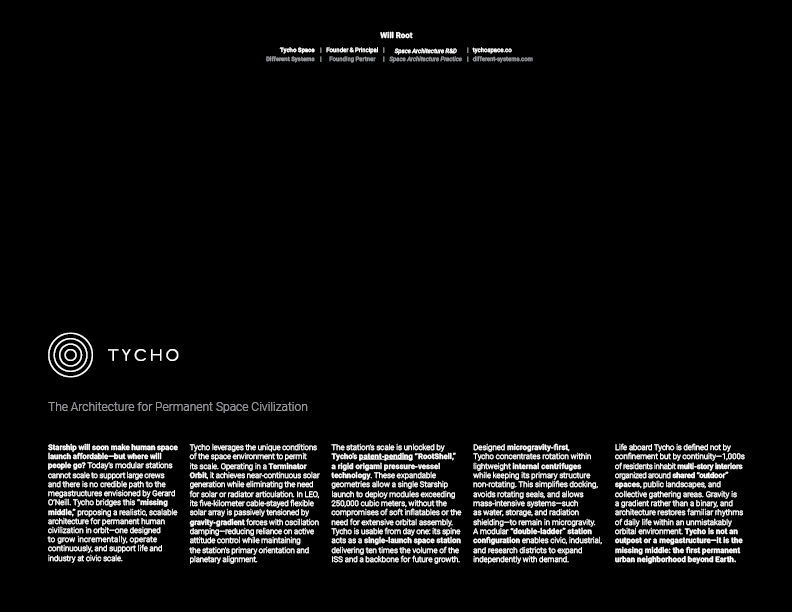
Tycho Station was developed as a design submission for the inaugural Aurelia Prize in Design for Space Urbanism, an international competition challenging architects, engineers, and designers to envision the future of permanent human settlements beyond Earth. Inspired by the 50th anniversary of NASA's 1975 Summer Study, the competition sought practical yet visionary concepts for space stations, lunar settlements, and orbital industries. Tycho was awarded First Prize, receiving the competition's $20,000 grand prize from a jury that included NASA astronaut Victor Glover, architect Bjarke Ingels, designer Thomas Heatherwick, Dr. Ariel Ekblaw, Dr. Olga Bannova, and Andrew Zuckerman.
Building upon the research presented in the preceding GeoHabs project, Tycho explores how emerging structural technologies could fundamentally reshape the architecture of future orbital cities. Rather than focusing on a single habitat design, the project investigates station-scale planning, artificial gravity, orbital mechanics, infrastructure, and urban design as an integrated architectural system.
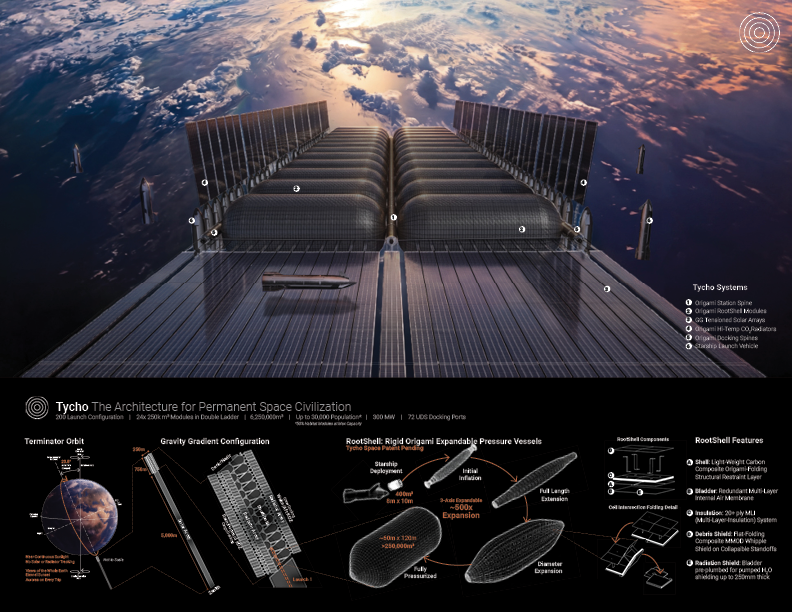
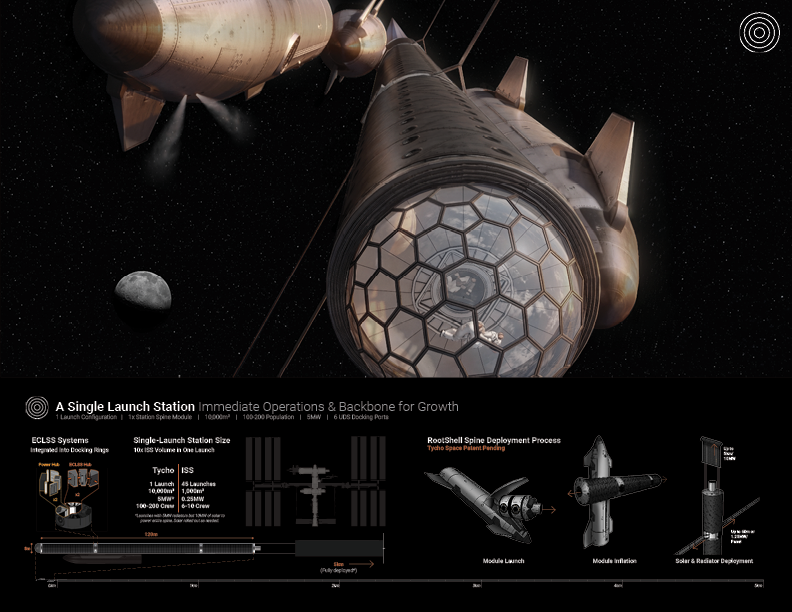
Central to the concept is RootShell, a patent-pending family of rigid origami pressure vessels that originated from the author's research and is now under development through Tycho Space, a startup focused on deployable space habitat technologies. RootShell combines rigid composite origami structures with deployable pressure vessel technology to dramatically increase launch packing efficiency while reducing structural mass and minimizing on-orbit assembly. Rather than serving as a proposal for RootShell itself, this project assumes the successful maturation of those technologies and explores the architectural opportunities they enable.
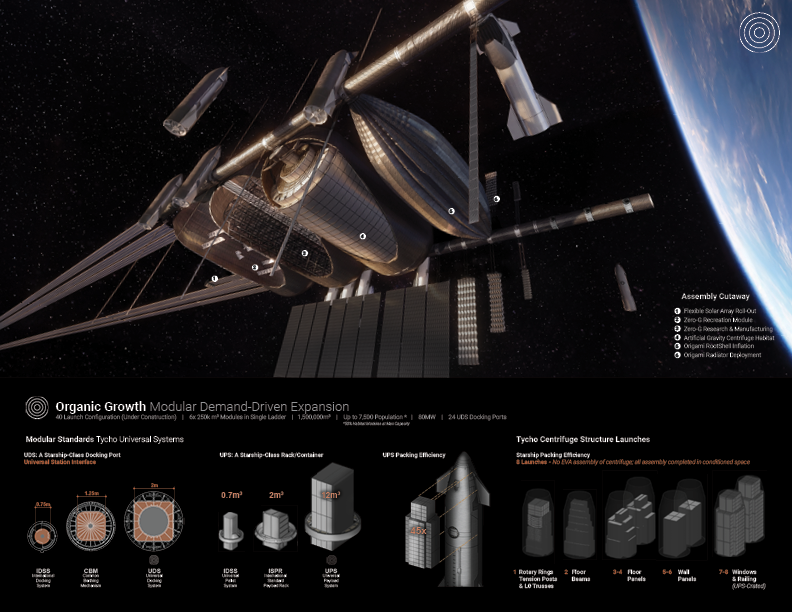
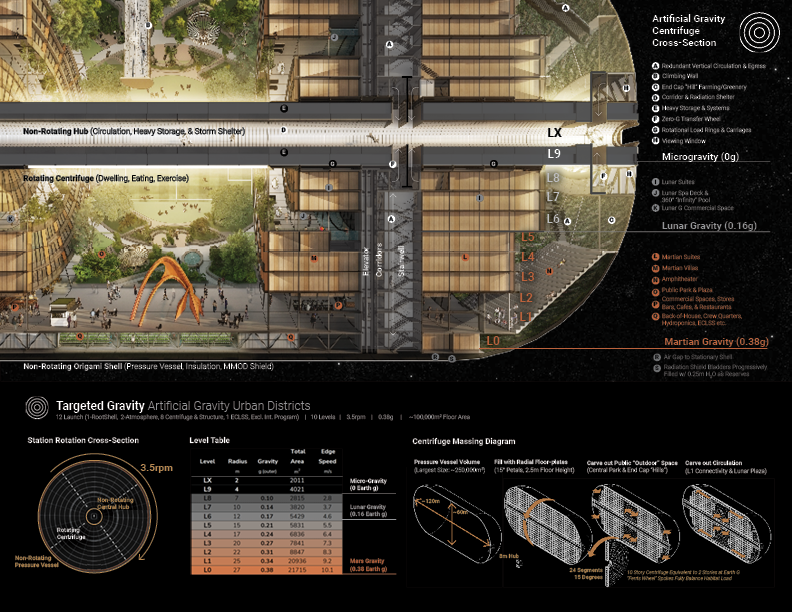
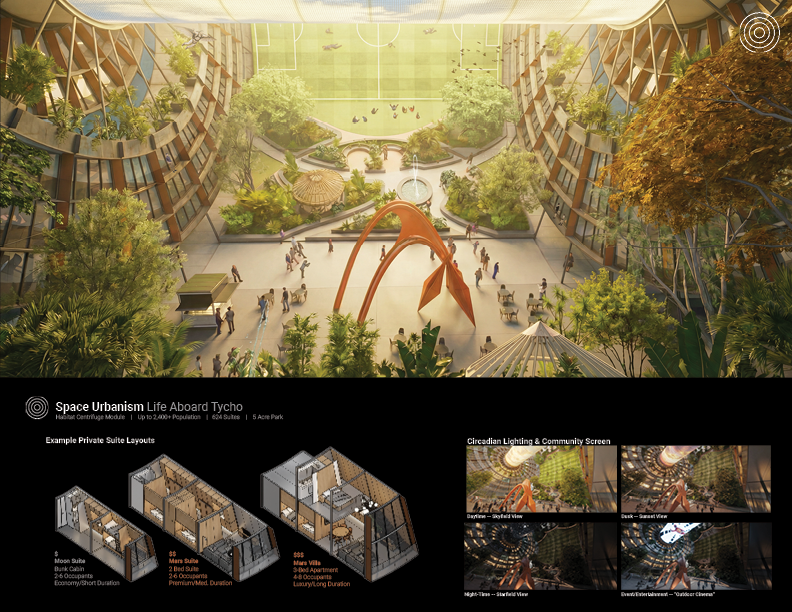
The resulting concept examines scalable station architectures—including gravity-gradient stabilization, terminator orbit operations, internal artificial gravity centrifuges, modular infrastructure, and urban-scale interior planning—to explore how orbital habitats might evolve from scientific outposts into permanent communities supporting thousands of residents.